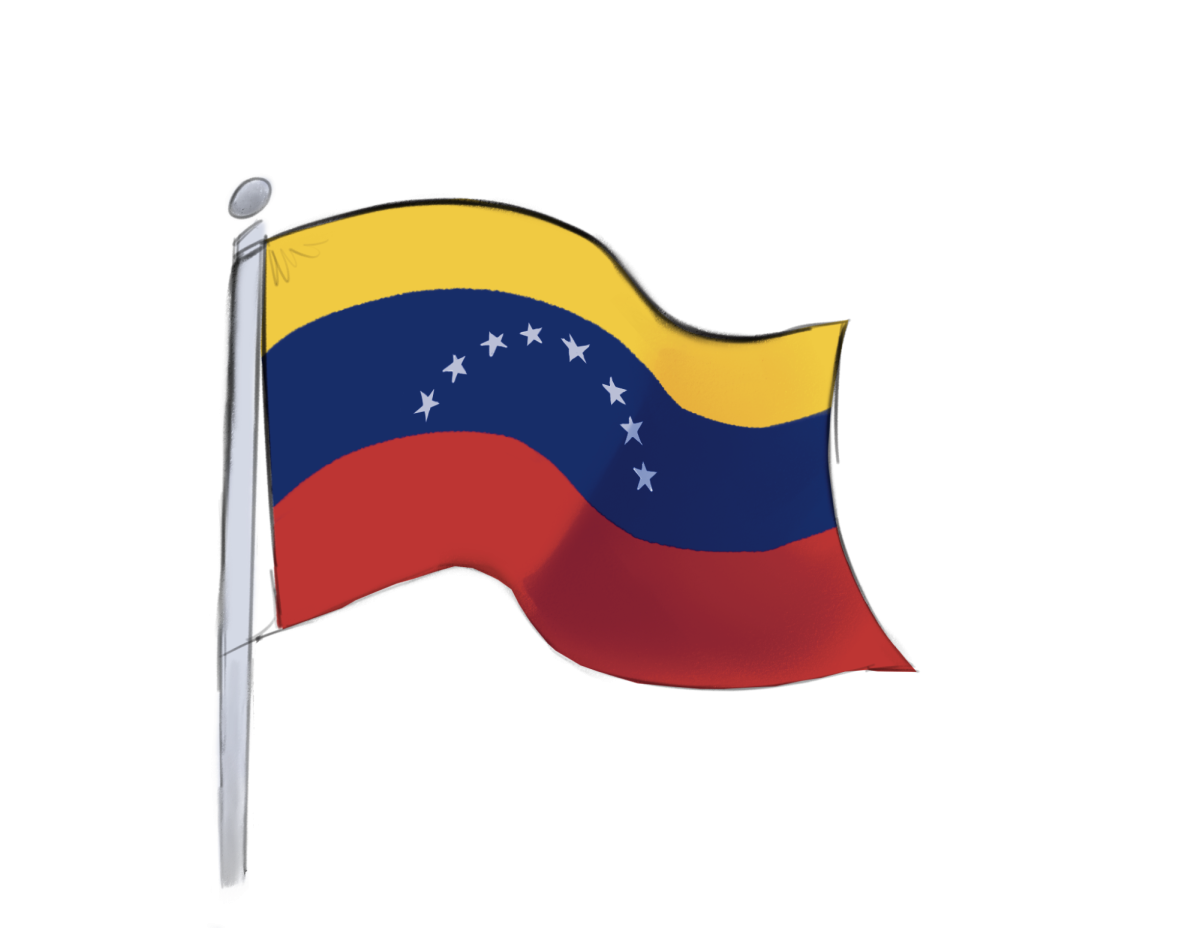
Since the Trump administration has returned for its second term, tension between the U.S. and Venezuela has risen. Starting in the late summer of 2025, the U.S. conducted military strikes in the Caribbean in hopes of collapsing the Venezuelan government. The rationale for these attacks came from U.S. President Donald Trump, who has accused Venezuela of trafficking mass amounts of cocaine into the U.S. This ties back to Trump’s first term, when he charged Venezuelan President Nicolas Maduro with being the head of a loose criminal network with ties to corrupt Venezuelan officials who profited from drug trafficking, the Cartel de los Soles.
Most recently, on Jan. 3, 2026, the U.S. government sent domestic agents, with the help of the military, to capture the Venezuelan president and his wife in their sleep. This was explained as the U.S. carrying out an arrest warrant for Maduro in U.S. court, due to him having reportedly aided in funnelling drugs into America.
The military action in a foreign country has some U.S. citizens concerned about setting a precedent for meddling in foreign governmental affairs.
“Both China and Russia want places [Taiwan, Ukraine], and there’s this thought that they could use that as an excuse to be like, ‘Look, well, the U.S., they went into Venezuela and took out the guy they want, so we can do the same,’” said history teacher Michael Crotty.
In the absence of leadership, Venezuelan Vice President Delcy Rodríguez was sworn in as the new president of Venezuela shortly after Maduro’s capture. Although Trump is unsure if a new election will take place and has stated that the U.S. will be running Venezuela for years, this makes way for the U.S. to gain even more from Venezuela than previously thought. On Jan. 13, Trump declared himself Venezuela’s “acting president.”
In a high-profile meeting on Jan. 9, Trump, Vice President JD Vance and Secretary of State Marco Rubio met with oil executives to discuss the future for Venezuela’s vast oil supply, which currently ranks them as #1 in the world of proven oil reserves that account for about 17 percent of global oil. In the meeting, Trump shared what oil companies can gain from drilling in Venezuela, as reported by DWS News on their full video of the meeting.
“Venezuela’s gonna be very successful and the people of the United States are going to be big beneficiaries because we are going to be extracting numbers of oil. So you’re dealing with us directly. You’re not dealing with Venezuela at all. We don’t want you to deal with Venezuela.”