
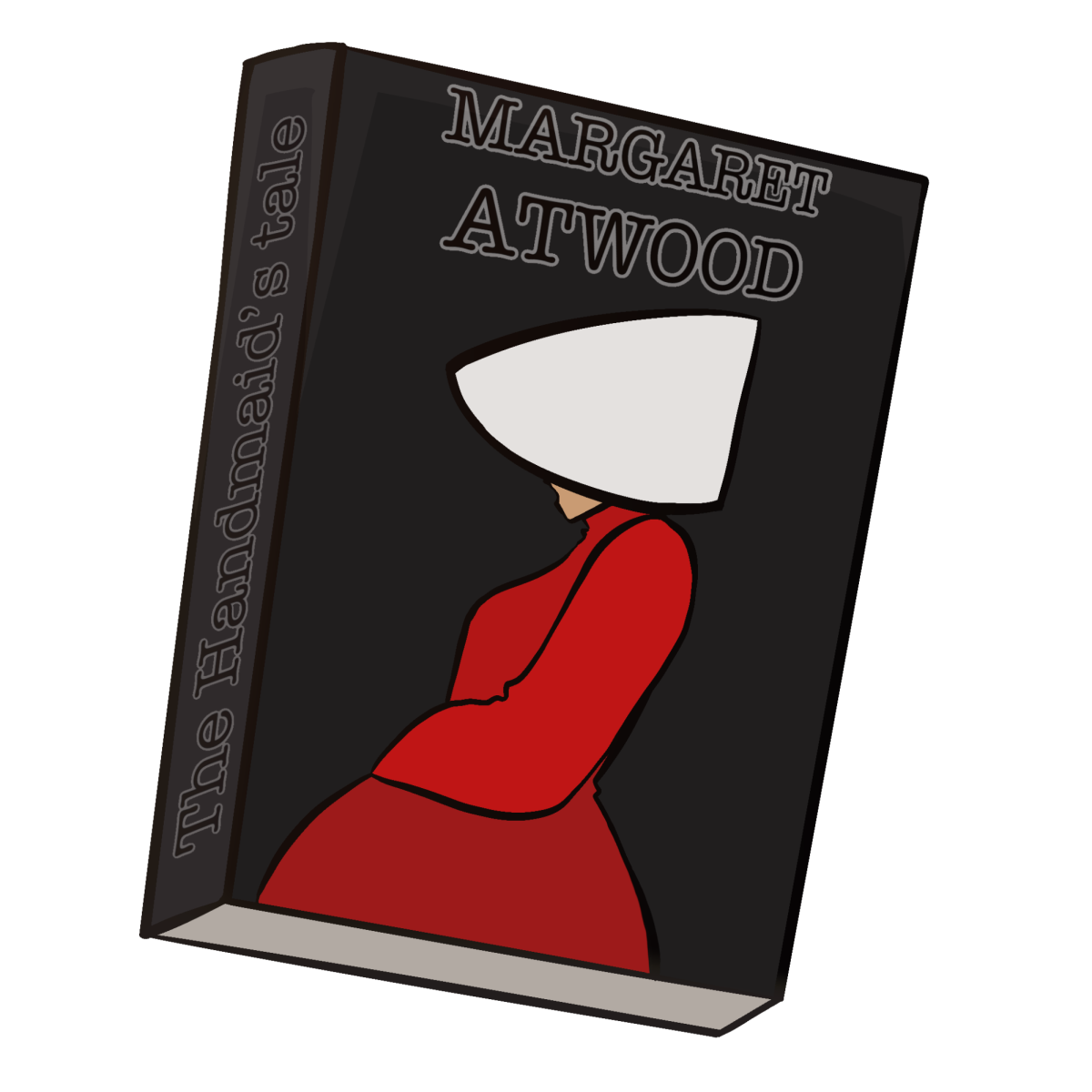
The Handmaid’s Tale by Margaret Atwood is a haunting novel set in a dystopian future under the control of a strict government called the Republic of Gilead. It follows Offred, a woman whose life has been completely changed against her will by Gilead’s regulations, who is forced to serve as a handmaid –a woman whose job it is to give birth.
Despite taking place in a fictional future, predominantly unlike our current society, the novel’s emotional writing gives it a strikingly uncomfortable realism. Told in the first person, Offred’s voice is not exaggerated or emotional, despite her situation. Instead, she is observant and reflective. Part of what makes this book such an unsettling read is the eerily calm narration, which forces us as readers to sit with the chilling reality of Offred’s situation. It feels less like a work of fiction and more like someone recounting a lived experience.
And, realistically, it could be. When recalling how she came to write The Handmaid’s Tale, Margaret Atwood said, “I made a rule for myself: I would not include anything that human beings had not already done in some other place or time, or for which the technology did not already exist.”
This realism adds another layer of disturbing emotion to the novel, highlighting the very real experiences of women like Offred throughout history.
During the story, Offred reflects on her past and remembers times when her life was different from her current reality, emphasizing how gradual change can be. It highlights how the loss of freedom is not something that takes place overnight, but instead something that happens step by step. This idea adds an uncomfortable resemblance to reality, suggesting these extreme social shifts can often begin small and seemingly manageable. It encourages readers to question similarities in their lives and the things they might be taking for granted.
The Handmaid’s Tale leaves a plaguing and lasting impression on readers. It serves as a warning and challenges people to reflect on themes such as oppression and gender roles. It’s a powerful novel that leaves you contemplating the fragility of freedom, and it lingers long after you’ve finished the last page.